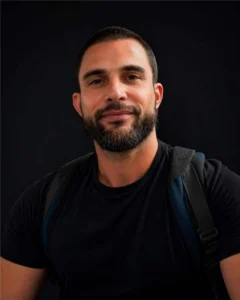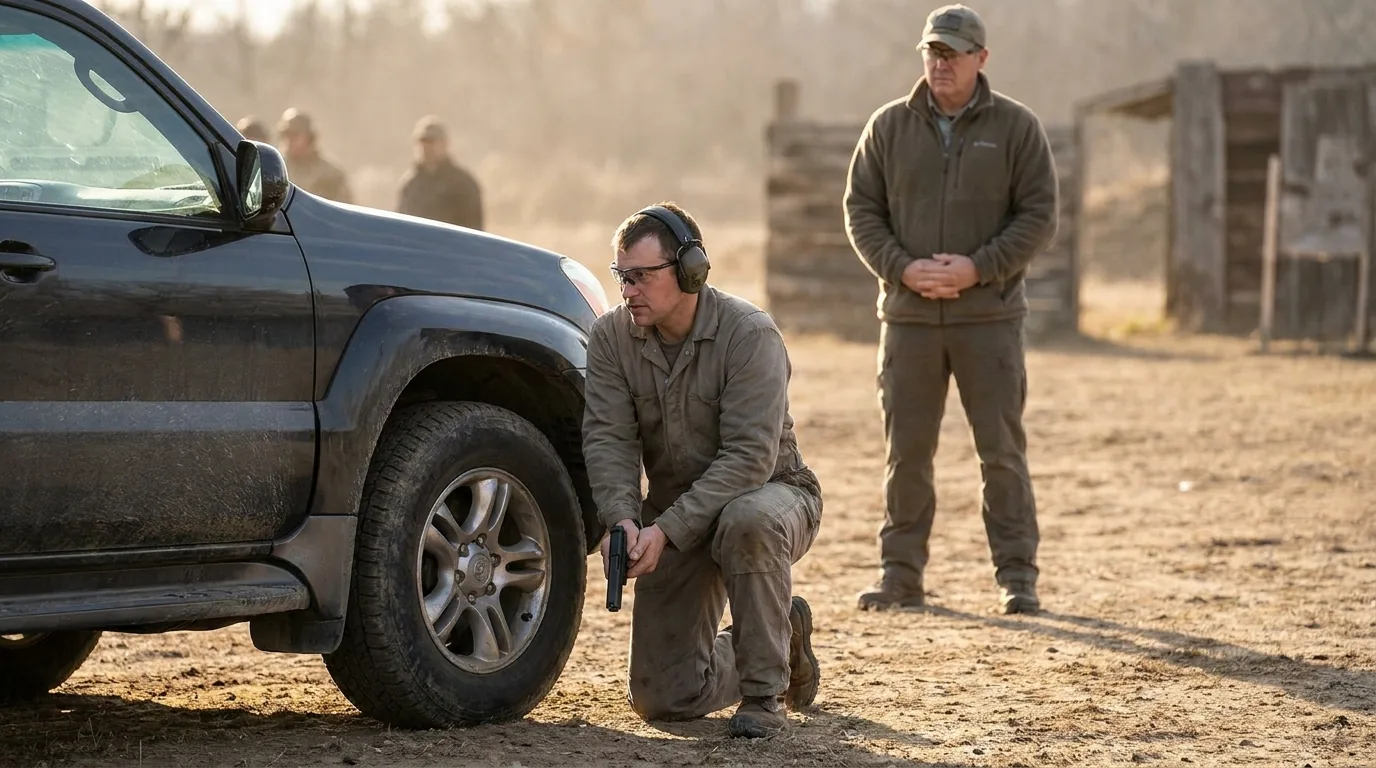
Matt Cheun teaches firearms to executive protection agents. He is also the first to say that marksmanship alone doesn’t make someone ready to protect a client.
“I absolutely think that somebody can be really good on a flat range and then fall apart in a scenario.”
Key takeaways
- Matt says most people approach a scenario as a single event: it starts, the gunfight ensues, the bad guy is down, and that’s it. He breaks it into three phases.
- Shooting without decision-making leads to bad shoots. Decision-making without shooting capability leads to missed shots.
- The more people are put in situations where they have to process information and make decisions against living, breathing, thinking people, the better they get at doing it when it counts.
- When protecting a VIP or celebrity, he says, most of the time the client doesn’t care whether the agent can shoot or fight.
Where the Attention Goes
Matt explains it through attention. On a flat range, a shooter can invest all of their attention in the shooting: how they grip the gun, how they align the sights, how they draw and present it.
In a scenario, that attention has to go somewhere else. The shooter now has to focus on the decision and on the information in the room. That forces the shooting to run in the background.
If the shooting hasn’t been trained hard enough to run on its own, Matt says, one of two things happens. The shooting falls apart. Or the shooter focuses too heavily on the shooting, loses the information, and makes a bad shoot decision.
“One of the biggest things that we have to figure out is how to make the shooting run in the background.”
The Competition Shooter Question
Matt points to USPSA M-class and GM-class shooters as amazing shooters. The question he asks is whether a shooter also has the tactical thinking and the ability to process information under pressure outside of the competitive setting.
The person he would trust on a protective detail can run the gun, but is also calm and able to process information while under pressure. “Because if we are just acting erratically and not processing information, that’s going to end up biting us in the butt.”
Three Phases, Not One
Matt says most people approach a scenario as a single event: it starts, the gunfight ensues, the bad guy is down, and that’s it. He breaks it into three phases.
Pre-action. How are we approaching this situation? What information do we have that will help us make an educated decision about how to approach it?
Action. The gunfight or the altercation. “We got to win that.”
Post-action. What are we doing after the altercation is over? Are we looking for people to help us? Where do we keep ourselves as safe as possible, not just from additional bad guys, but from good guys who are responding to the same situation?
“Because realistically, you don’t just go home after the gunfight.”
Matt says that is often where people’s view of their own performance changes. They come out of a scenario thinking they drew well and shot well. In the debrief, they start to realize everything that happened outside the action.
Shooting or Deciding?
Matt considers both equally important. Shooting without decision-making leads to bad shoots. Decision-making without shooting capability leads to missed shots. But he gives decision-making real weight, “because the last thing we want to do is shoot somebody that doesn’t deserve to be shot.”
Make the Mistakes in Training
Matt’s answer is exposure. The more people are put in situations where they have to process information and make decisions against living, breathing, thinking people, the better they get at doing it when it counts.
“We would much rather you make the mistakes here.”
What the Client Actually Notices
Matt adds one more reminder for protectors. When protecting a VIP or celebrity, he says, most of the time the client doesn’t care whether the agent can shoot or fight. They care about the customer service: whether the agent is proactive, makes their life easier, and makes them feel protected.
“Although I’m a firearms instructor, I still don’t believe that the firearm is the end-all be-all solution.”
Frequently asked questions
Is marksmanship enough for executive protection?
No. Matt Cheun teaches firearms to executive protection agents and is the first to say that marksmanship alone doesn’t make someone ready to protect a client. “I absolutely think that somebody can be really good on a flat range and then fall apart in a scenario.” On a flat range, a shooter can invest all of their attention in the shooting. In a scenario, that attention has to go to the decision and the information in the room.
What are the three phases of a scenario?
Matt breaks a scenario into pre-action, action and post-action. Pre-action is how you approach the situation and what information you have. Action is the gunfight or the altercation: “We got to win that.” Post-action is what you do after the altercation is over, including keeping yourself as safe as possible, not just from additional bad guys, but from good guys who are responding to the same situation.
What matters more for a protector, shooting or decision-making?
Matt considers both equally important. Shooting without decision-making leads to bad shoots. Decision-making without shooting capability leads to missed shots. He gives decision-making real weight, “because the last thing we want to do is shoot somebody that doesn’t deserve to be shot.”
How should protectors train for real scenarios?
Through exposure. The more people are put in situations where they have to process information and make decisions against living, breathing, thinking people, the better they get at doing it when it counts. “We would much rather you make the mistakes here.”
Do clients care whether their bodyguard can shoot?
Most of the time, no. When protecting a VIP or celebrity, Matt says, the client cares about the customer service: whether the agent is proactive, makes their life easier, and makes them feel protected.
Related on EP Journal: Everyone Has a Camera Now: Why Overly Physical Bodyguards Lose the Job · Should a Bodyguard Be the Client’s Friend?
Disclosure: Matt Cheun is the Director of the Firearms Department at Pacific West Academy and an executive protection agent with Advanced Security Concepts.