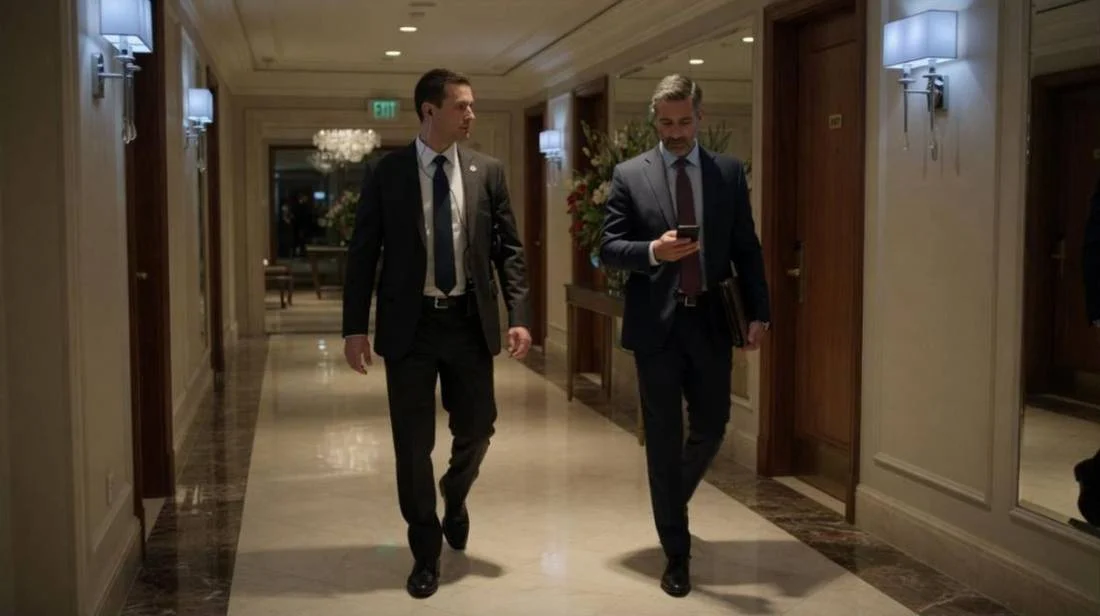
Physical stress, silent stress, and why an agent who is not working may still not be recovering
Key takeaways
- Physical stress comes with a problem you can act on. Once it is solved, the body can begin returning toward its baseline.
- Silent stress comes from anticipation and uncertainty: a new client tomorrow, a client who skipped “good morning,” a day on standby in a hotel room.
- Physical inactivity is not the same as mental recovery. A quiet day on assignment can still be exhausting.
- Once preparation is done, more worrying adds no operational advantage. Agents need real recovery, and managers can reduce needless uncertainty.
Stress is a natural survival mechanism. It has been part of human biology for thousands of years. When our ancestors faced danger, whether escaping a predator or confronting a physical threat, their bodies activated a survival response. Stress hormones, including adrenaline and cortisol, helped prepare them to react quickly, stay alert, and survive.
That same biological mechanism exists in us today. The difference is that modern stress does not always come from physical danger. Sometimes it comes from uncertainty, anticipation, responsibility, and situations over which we have little or no control.
In executive protection, I believe it is important to recognize two different types of occupational stress. I call them physical stress and silent stress. Both can activate the body’s stress response, and both can affect our health and performance. But silent stress is often more difficult to recognize and manage.
What does physical stress look like on a detail?
Physical stress, as I define it in executive protection, is the stress associated with an immediate situation that requires action. It does not necessarily involve physical exertion. It can also involve logistical or operational problems that must be solved in real time. For example:
- The client’s vehicle is late.
- You need to get the client to an event on time.
- Paparazzi are blocking an entrance.
- You are moving through a crowded location.
- A planned route becomes unavailable.
- You must coordinate an arrival or departure under pressure.
- An unexpected security issue requires an immediate decision.
Each of these situations can activate the body’s stress response. Your heart rate may increase. Your attention becomes more focused. Adrenaline and cortisol help your body and brain respond to the challenge.
But these situations usually have something important in common: there is a problem in front of you, and you can take action to solve it. You recognize the problem, make a decision, act, and eventually resolve the situation.
Once the challenge has passed, your body’s stress response can gradually return toward its normal baseline. This does not always happen immediately, but the source of the immediate pressure has been addressed. As protection professionals, we are trained to operate under this type of pressure. In many ways, it is part of our daily work.
What is silent stress?
Silent stress is different. It is the psychological pressure created by anticipating future events, worrying about uncertain outcomes, or carrying responsibilities that cannot be resolved through immediate action. It is not necessarily associated with physical activity or an actual threat. You can be sitting in a quiet hotel room, relaxing in an airport lounge, or lying in bed, and still experience a significant stress response.
Consider a simple example. You are flying tomorrow morning. You have already packed. Your transportation is arranged. Your flight is confirmed. You plan to arrive at the airport early. There is nothing else you need to do right now.
Yet you may still feel slightly anxious. Your mind continues to think about the flight, the timing, possible delays, or things that could go wrong. Physically, everything is calm. Mentally, your body may still be responding to the anticipation of what comes next. That is what I call silent stress.
Where does silent stress show up in protection work?
The night before a new client
You are meeting a new client tomorrow morning. You have reviewed the itinerary, prepared your equipment, checked transportation, and coordinated the necessary details. Everything is ready. But when you go to bed, your mind continues working:
- Will the client like me?
- Will everything go according to plan?
- What if the schedule changes?
- What if something unexpected happens?
You are not physically dealing with any of these problems, because they have not happened. In fact, some of them may never happen. But your brain is already processing them as potential challenges. This is the difference between solving a problem and continuously anticipating one.
The client who didn’t say good morning
Sometimes silent stress comes from something much smaller. Imagine arriving for duty and greeting your client. Normally, the client is friendly and acknowledges you. Today, the client walks past without saying good morning. Nothing else happens.
But you begin to wonder. Did I do something wrong? Is the client unhappy with my performance? Did someone complain about me? Am I going to lose this assignment?
You have no actual evidence that anything is wrong. Perhaps the client is simply distracted, tired, or dealing with a personal issue. But because the situation remains uncertain, your mind may continue returning to it throughout the day. This is how a minor interaction can become a prolonged psychological burden. The stress is not necessarily caused by what happened. It is caused by the uncertainty and the meaning we assign to it.
The day in the hotel room
This may be one of the most common and least recognized examples of silent stress in executive protection. You are on a multiday assignment. Today, the client has no scheduled activities. You remain in your hotel room, waiting for instructions or possible changes.
From the outside, it looks like a day off. You are not driving, walking, managing crowds, or actively protecting anyone. But mentally, you may never completely disconnect. You wonder whether the client will call. You think about tomorrow’s schedule. You anticipate a possible last-minute change. You remain aware that you may be required to respond at any moment.
Even when nothing happens, you continue carrying the responsibility of being available. Physical inactivity is not the same as mental recovery. A person can spend an entire day sitting in a hotel room and still feel mentally exhausted at the end of it. When this pattern continues for days or weeks, it can become a serious occupational concern.
What happens in the body under prolonged stress?
To understand why silent stress matters, we need to understand a few basic medical principles. When the brain perceives a threat or significant challenge, it activates several biological systems. One is the sympathetic nervous system, which produces the familiar fight-or-flight response. Another is the hypothalamic-pituitary-adrenal axis, commonly called the HPA axis. This system signals the adrenal glands to release cortisol.
Cortisol is not a bad hormone. It is essential to normal health. It helps regulate energy availability, metabolism, blood pressure, immune activity, and the body’s response to stress. In a healthy stress response, these systems increase activity when needed and then gradually return toward normal levels.
The concern develops when psychological stress becomes frequent, prolonged, or difficult to recover from. Importantly, chronic stress does not mean cortisol remains constantly elevated. Prolonged stress can alter the body’s normal cortisol rhythm, and individuals respond differently. Medical researchers sometimes describe the cumulative strain associated with repeated or prolonged stress responses as allostatic load.
Over time, chronic stress and insufficient recovery can contribute to:
- Poor sleep quality and persistent fatigue.
- Anxiety and repetitive worrying.
- Irritability and reduced patience.
- Difficulty concentrating and making decisions.
- Emotional exhaustion.
- Reduced confidence and motivation.
- Increased risk of depression and other health problems.
These effects are not automatic, and cortisol is not the only factor involved. But the relationship between prolonged psychological stress, physical health, and mental performance is well established.
Why can silent stress be more dangerous for a protection agent?
I believe silent stress deserves particular attention because it can develop without the agent recognizing it. When you are physically managing a difficult situation, you know you are under pressure. You recognize the challenge. You take action. You resolve it.
But silent stress often develops quietly. You may call it overthinking, worrying, nervousness, or simply being responsible. You may not recognize that your mind is repeatedly activating a stress response without allowing sufficient psychological recovery.
Over time, this can begin affecting your emotional stability and professional performance. An agent who experiences prolonged stress, poor sleep, and mental exhaustion may become less patient, less focused, and less confident. Those are serious concerns in a profession that requires sound judgment, situational awareness, emotional control, and the ability to make decisions under pressure.
The irony is that silent stress can gradually reduce the very capabilities an agent needs when a real operational challenge occurs.
How can agents recognize and manage silent stress?
The objective is not to eliminate stress. That would be unrealistic, particularly in executive protection. The objective is to distinguish between stress that requires immediate action and stress created by situations that cannot currently be controlled.
Preparation is productive. Repeatedly imagining the same problem without identifying a new action is often not. An agent should learn to ask:
- Is there a real problem in front of me?
- Can I do something about it right now?
- Have I already taken reasonable steps to prepare?
- Am I solving a problem, or am I repeatedly thinking about a possible problem?
This distinction is important. Once appropriate preparations have been completed, additional worrying may offer no operational advantage.
Agents also need genuine recovery periods. Exercise, adequate sleep, predictable off-duty time, healthy routines, and psychological detachment from work can all help manage occupational stress.
What managers can do
Management has responsibilities as well. Clear instructions, realistic schedules, defined expectations, and reliable communication can reduce unnecessary uncertainty. An organization cannot expect agents to remain psychologically on duty around the clock without consequences.
Why silent stress belongs in protection training
Executive protection professionals spend considerable time training for physical threats, emergency situations, defensive tactics, and operational decision-making. We learn how to control our surroundings, recognize risks, and respond to problems. But we spend far less time understanding what happens psychologically when there is no immediate problem to solve.
Physical stress is often visible, immediate, and actionable. Silent stress is often invisible, anticipatory, and unresolved. Both deserve attention. An agent can appear completely calm while internally experiencing substantial psychological pressure. And just because an agent is not physically working does not necessarily mean the agent is mentally recovering.
I believe recognizing silent stress should become part of professional executive protection education. Agents need to understand not only how to perform under pressure, but also how to recognize prolonged psychological strain and recover from it.
Because physical readiness alone is not enough. A professional protection agent must be physically capable, mentally prepared, emotionally stable, and sufficiently recovered to perform when it matters most.
Frequently asked questions
What is silent stress in executive protection?
Silent stress is psychological pressure that comes from anticipating future events, worrying about uncertain outcomes, or carrying responsibilities that cannot be resolved through immediate action. It does not need a physical threat: an agent sitting in a quiet hotel room or lying in bed can still experience a significant stress response.
How is silent stress different from physical stress?
Physical stress comes with a problem in front of you that you can act on, such as a late vehicle, a blocked entrance, or a route that becomes unavailable. Once it is resolved, the stress response can gradually ease. Silent stress comes from problems that have not happened, and may never happen, so there is nothing to act on and nothing that resolves it.
Why can a day on standby be exhausting for a protection agent?
On a multiday assignment, a day with no scheduled activities can look like a day off, but the agent stays available, waiting for instructions or last-minute changes. The responsibility of being available continues even when nothing happens. Physical inactivity is not the same as mental recovery.
Can prolonged stress affect an agent’s performance?
Yes. Prolonged stress, poor sleep, and mental exhaustion can make an agent less patient, less focused, and less confident, in a profession that depends on sound judgment, situational awareness, and emotional control. Silent stress can wear down the very capabilities an agent needs when a real operational challenge occurs.
How can a protection agent manage silent stress?
Separate stress that requires immediate action from stress about situations you cannot control right now. Ask whether there is a real problem in front of you, whether you can do something about it now, and whether you have already prepared. Once preparation is done, more worrying adds no operational advantage. Build in genuine recovery: exercise, adequate sleep, predictable off-duty time, healthy routines, and psychological detachment from work.
What can protection managers do to reduce silent stress?
Clear instructions, realistic schedules, defined expectations, and reliable communication reduce unnecessary uncertainty. An organization cannot expect agents to remain psychologically on duty around the clock without consequences.
Related on EP Journal: The 24-Hour Turnaround · The Executive Protector Lifestyle
About the author